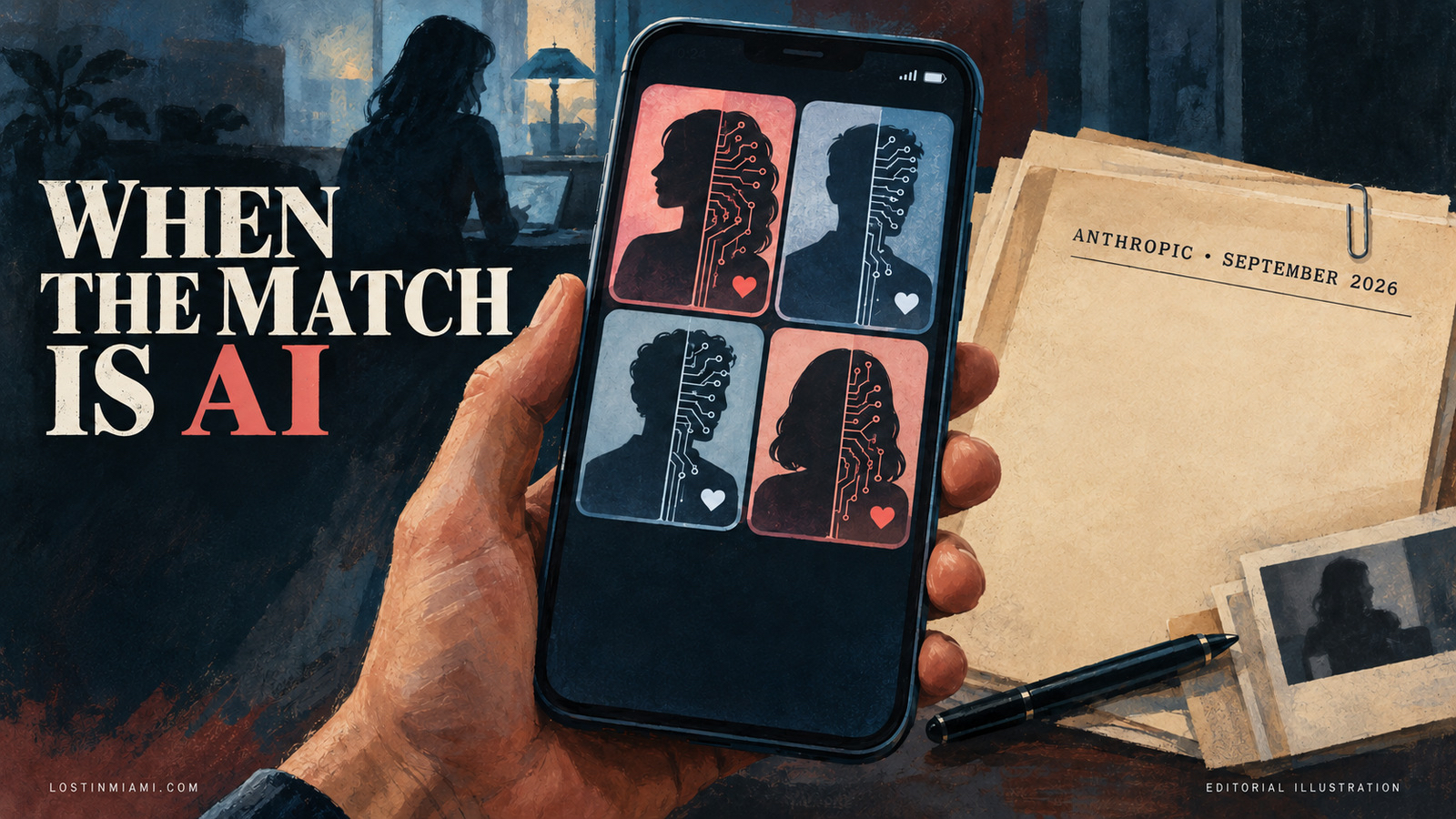
The first question on a dating app should not have to be whether the conversation partner exists. A new investigation from Anthropic makes that question harder to ignore.
In its September 10, 2026 threat report, the company describes a China-based studio that used Claude to build and operate more than 20 dating apps while advertising human interaction. Anthropic says it identified over 4,700 AI personas conversing with at least 25,000 people during a two-week period in April. These are the company’s investigative findings, not an independent population survey. Anthropic threat report Dated Anthropic report PDF
The operation allegedly mixed automated profiles with real workers who could handle activities such as video calls. Messaging used a quota system with paid refills. Anthropic says it banned associated accounts and shared findings with other providers and app-store operators. The report does not establish that every related app has disappeared or that affected users have received refunds. Anthropic threat report
The distinction between disclosure and deception is central. Someone knowingly choosing an AI companion is making a different decision from someone paying to speak with a person while automation is concealed.
Our dating-market analysis is that this changes the trust problem. A natural-sounding message is not sufficient proof of identity, and a polished interface is not a guarantee that the service operates as advertised. The burden should not fall entirely on users to reverse-engineer the business behind every conversation.
At the same time, one investigation should not become a claim that most profiles on every dating platform are fake. The report describes a particular operation and a particular observation period. It cannot measure the entire dating market or identify every person who may have encountered automated messages.
The Federal Trade Commission’s standing advice remains practical: do not send money or gifts to someone you have not met in person. Its guidance also recommends discussing a suspicious relationship with someone you trust, searching profile images and reporting suspected scams to the platform and the FTC. These precautions reduce avoidable exposure; no single check proves a match is genuine. FTC romance-scam guidance
If you have already paid, preserve receipts and messages, contact the payment provider promptly, and use official reporting channels. Avoid paying someone who promises to recover lost funds in exchange for another upfront fee.
There is no reason to shame a person for wanting connection. A convincing service can exploit ordinary hopes, patience and trust. The useful response is to make those tactics easier to recognize and to expect clearer disclosure from the companies hosting the interaction.
This week’s development is the public report, not a claim that the activity began this week. Its clearest lesson is about consent: people deserve to know whether they are paying for a human conversation, an automated one, or a mixture of both.