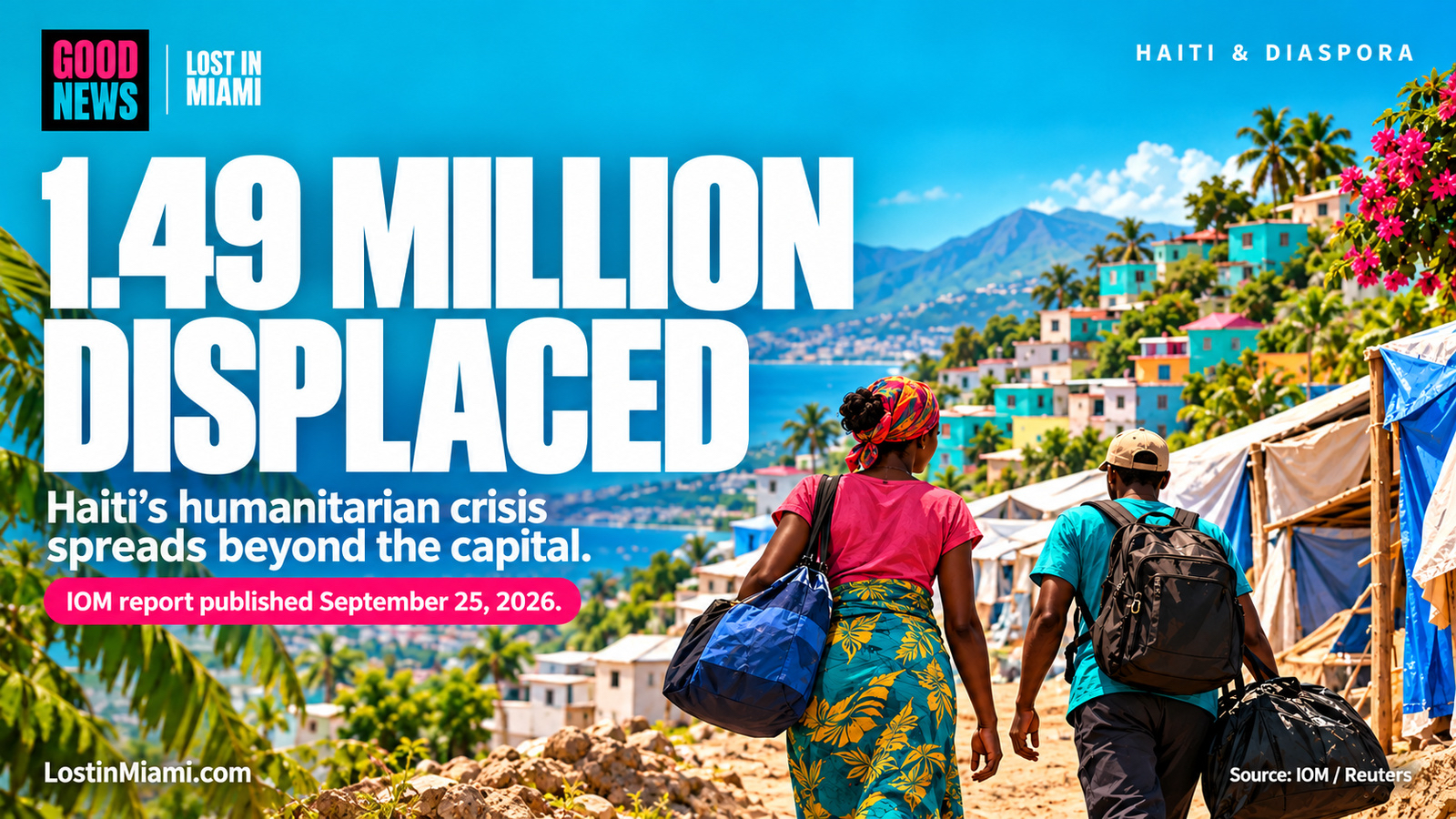
Haiti’s displacement emergency is no longer concentrated in Port-au-Prince. The International Organization for Migration’s latest tracking, published September 25 and covering data collected through August 12, places the number of internally displaced people at roughly 1.49 million—up from about 1.47 million in the previous round.
Nearly 80% are now outside the capital, according to IOM reporting summarized by Reuters. The sharpest recent increase was in Artibonite, where displacement rose about 16% between May and August. A department once viewed as a refuge for people fleeing metropolitan violence is now absorbing new pressure as insecurity expands.
The national number can hide how unstable daily life is. Families may move more than once, stay with relatives whose resources are already thin, or live in informal and collective sites exposed to weather and disease. IOM recorded fewer spontaneous displacement sites in this round, but that does not mean the crisis is ending. People can leave a site because they returned home, found another host or were forced to move again.
Hurricane season makes the situation more dangerous. Weak shelter, disrupted transportation and limited access to food, clean water and health services can turn a storm into a second emergency for people already uprooted by violence. IOM’s warning is about compounding risk, not a prediction that every displaced family will face the same conditions.
The data also has limits. IOM’s round used hundreds of enumerators and thousands of key informants across more than 1,100 localities, but insecurity can restrict access and conditions shift quickly. The 1.49 million figure is a structured humanitarian estimate, not a real-time headcount of every person in motion.
What this means for Haitian families: relatives in South Florida may face interrupted communication, repeated requests for support and uncertainty about whether loved ones can safely remain where they are. Check information through established humanitarian organizations, verify fundraising links and avoid posting a displaced person’s exact location without consent.
This report does not announce a new U.S. immigration rule, a TPS change or an automatic pathway to enter the United States. Humanitarian conditions in Haiti can inform policy debates, but immigration status depends on current law, agency action and individual facts.
Families seeking immigration guidance should use official USCIS information or consult a qualified legal-services provider. General information is not legal advice. The immediate verified development is humanitarian: displacement is growing beyond the capital, safe options are narrowing, and support systems are being asked to stretch farther.
Sources
Featured artwork: original editorial illustration.