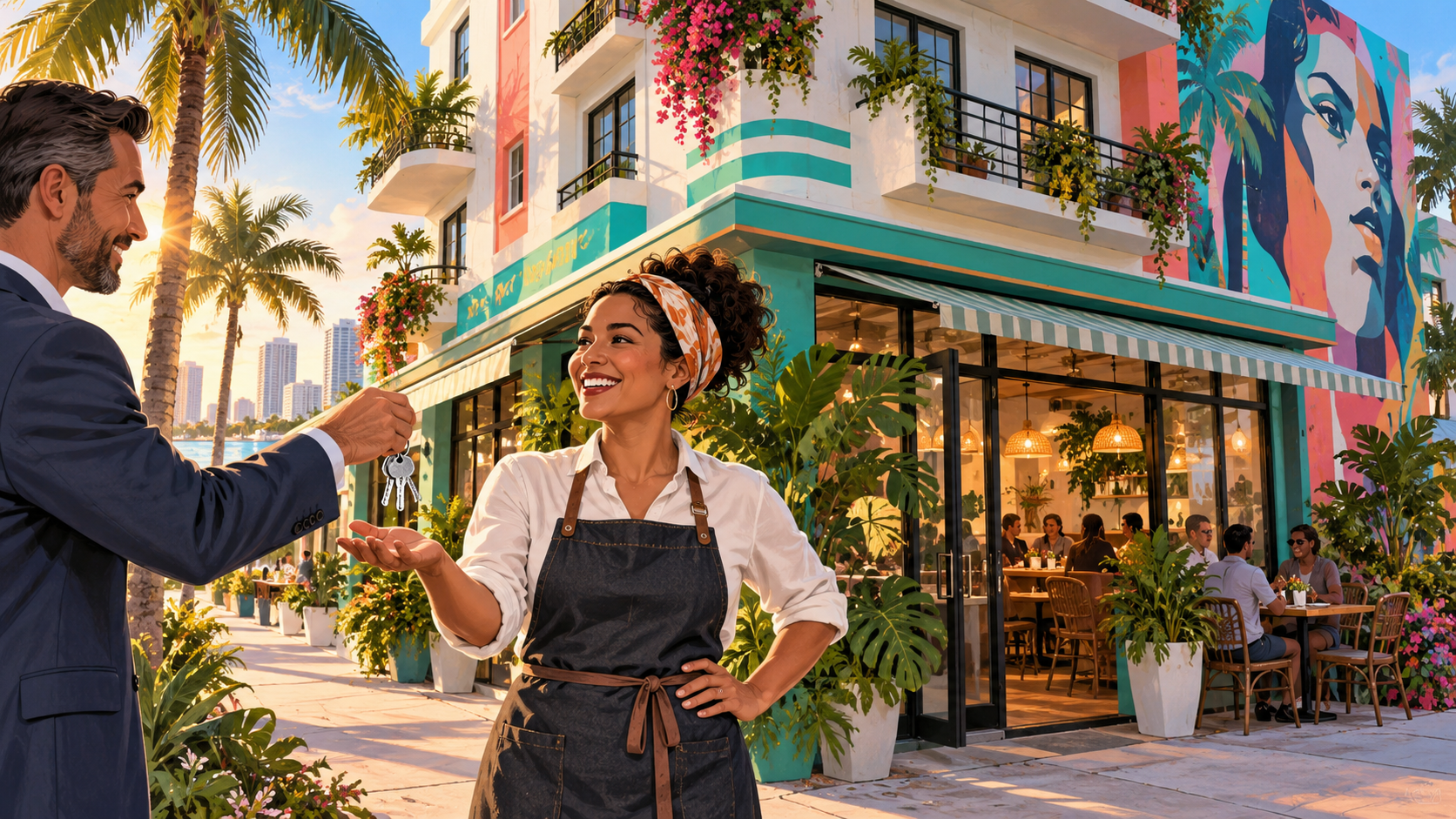
For a growing number of Miami restaurant owners, controlling the dining room is no longer enough. They also want control of the building.
Rising commercial rents are pushing some South Florida operators to purchase property instead of remaining dependent on long-term leases, according to reporting from Axios Miami and The Real Deal.
The strategy reflects the increasingly close relationship between Miami’s restaurant economy and its real-estate market. A successful restaurant can build a loyal customer base, invest heavily in improvements and contribute to a neighborhood’s popularity—only to face a rent increase when its lease expires.
Several recognizable establishments have already demonstrated that vulnerability. J. Wakefield Brewing closed its Wynwood taproom in 2024, while Panther Coffee left its Sunset Harbour location in early 2026. Rising occupancy costs were cited as important factors in those decisions.
Restaurant operator Matt Kuscher has moved in the opposite direction by acquiring property. Records cited by The Real Deal show that he purchased a 1,600-square-foot Coral Way property in 2021 for $475,000. His holdings also include a Wynwood building acquired in 2022.
Property ownership changes the financial equation. Mortgage payments and maintenance expenses remain significant, but the operator gains more protection from sudden lease increases. Improvements made to the location can also contribute to the value of an asset the business owns.
Ownership is not available to every restaurant. Purchasing commercial space requires capital, financing and the ability to survive Miami’s insurance, tax and construction costs. Established restaurant groups and operators with outside investors will generally have more options than a new independent business.
That creates a potential divide. Well-capitalized companies can build equity and stabilize their occupancy expenses, while smaller restaurants remain exposed to a competitive leasing market. If only the largest operators can secure desirable locations, Miami risks losing part of the local character that made its dining neighborhoods valuable.
Kuscher has also connected commercial ownership with housing. NBC 6 previously reported that he was developing ten affordable studio apartments intended for hospitality workers. That project illustrates how restaurant staffing and real estate increasingly overlap in a city where employees may struggle to live near their workplaces.
Buying property will not become the standard solution for every operator. Restaurants operate on narrow margins, and ownership introduces responsibilities that have little to do with food or service.
The movement is nevertheless meaningful. It shows that some owners now view real estate as a form of operational security rather than a separate investment.
Miami’s dining scene is famous for reinvention, but constant turnover is not always healthy. When local operators can own their locations, they gain a better chance of remaining part of the neighborhoods they helped build.