
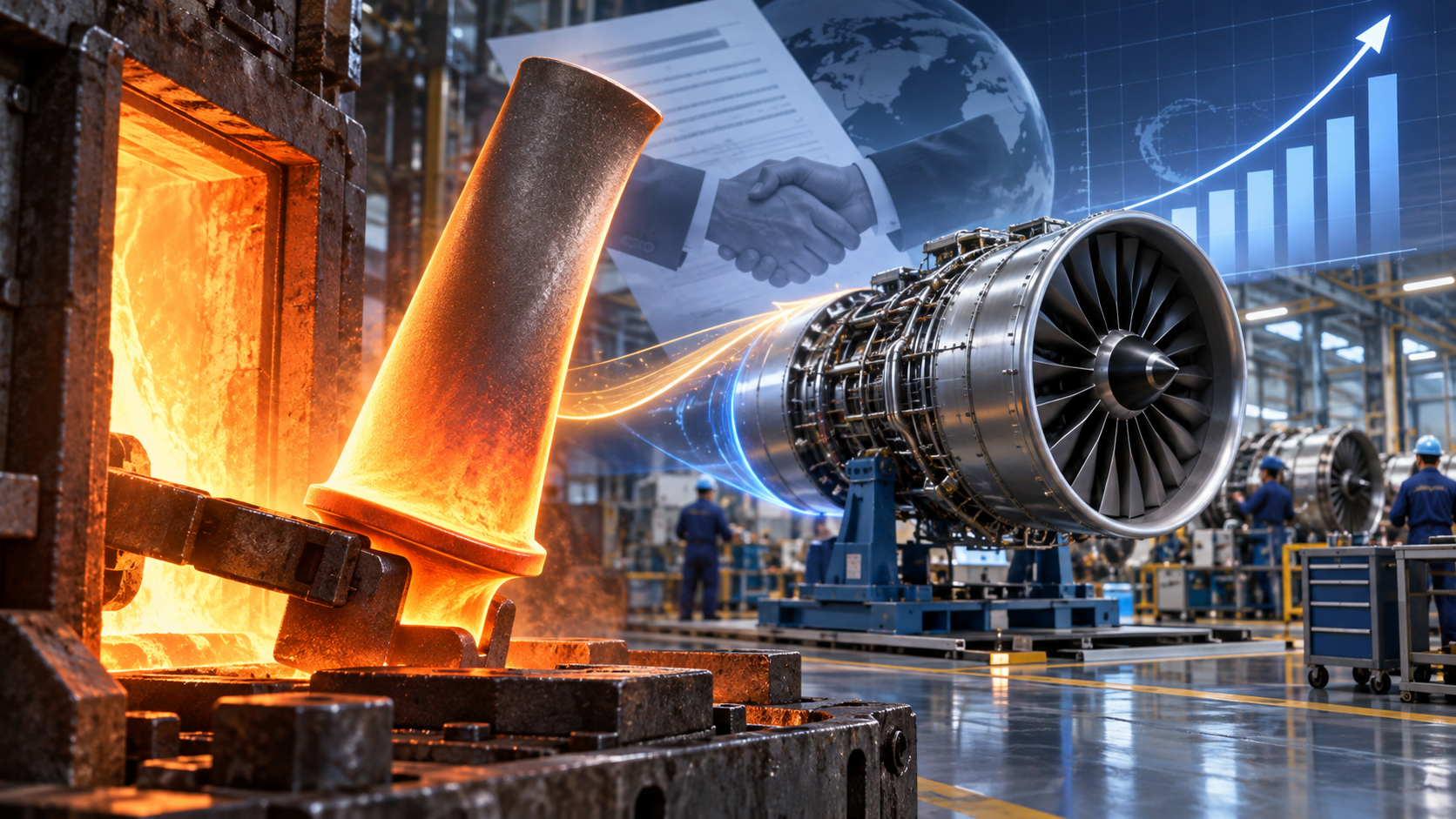
GE Aerospace is spending $11.75 billion to gain greater control over one of the most specialized parts of the jet-engine supply chain.
The company agreed to acquire Consolidated Precision Products, commonly known as CPP, from private-equity owners Warburg Pincus and Berkshire Partners. Reuters reported the transaction on September 8.
CPP manufactures complex castings used in aerospace and industrial applications. Those components help form engine parts capable of surviving extreme temperatures, pressure and repeated use. They are difficult to manufacture quickly because production requires specialized materials, equipment, certifications and technical knowledge.
That makes the deal strategically different from acquiring an airline, software platform or consumer brand. GE Aerospace is purchasing additional manufacturing capability within the system that supports its core engine business.
The timing reflects powerful commercial aviation demand. Airlines need new aircraft, while manufacturers and suppliers are still working through production limitations that developed during and after the pandemic. Engines and replacement components have become particularly important as carriers keep older aircraft operating longer.
GE reported second-quarter orders of approximately $16.5 billion, a 17% increase, and revenue of about $13.3 billion, up 21%. Its backlog exceeded $210 billion, according to the company’s investor update.
A large backlog signals customer demand, but it does not automatically become immediate revenue. Engines must be manufactured, inspected and delivered. Any shortage involving castings, forgings, electronics or skilled labor can slow the entire process.
Owning CPP could give GE greater visibility into production schedules and more direct influence over investment decisions. It could also allow the company to coordinate manufacturing capacity around future engine programs and the continuing demand for replacement parts.
The acquisition carries risks. Integrating a major supplier can create operational challenges, and paying $11.75 billion places pressure on GE to deliver meaningful improvements. Greater vertical integration can reduce dependence on outside companies, but it also places more responsibility for manufacturing delays inside the buyer.
GE expects the purchase to increase adjusted earnings per share and free cash flow during the first full year after completion. The transaction is expected to close during the second half of 2027, subject to regulatory review and customary conditions.
The broader business lesson is that the aviation recovery is not only about ticket demand. It is also about the factories producing highly engineered components that most travelers never see.
GE is betting that controlling more of that industrial foundation will help it convert a historically large backlog into completed engines, service revenue and long-term customer relationships.