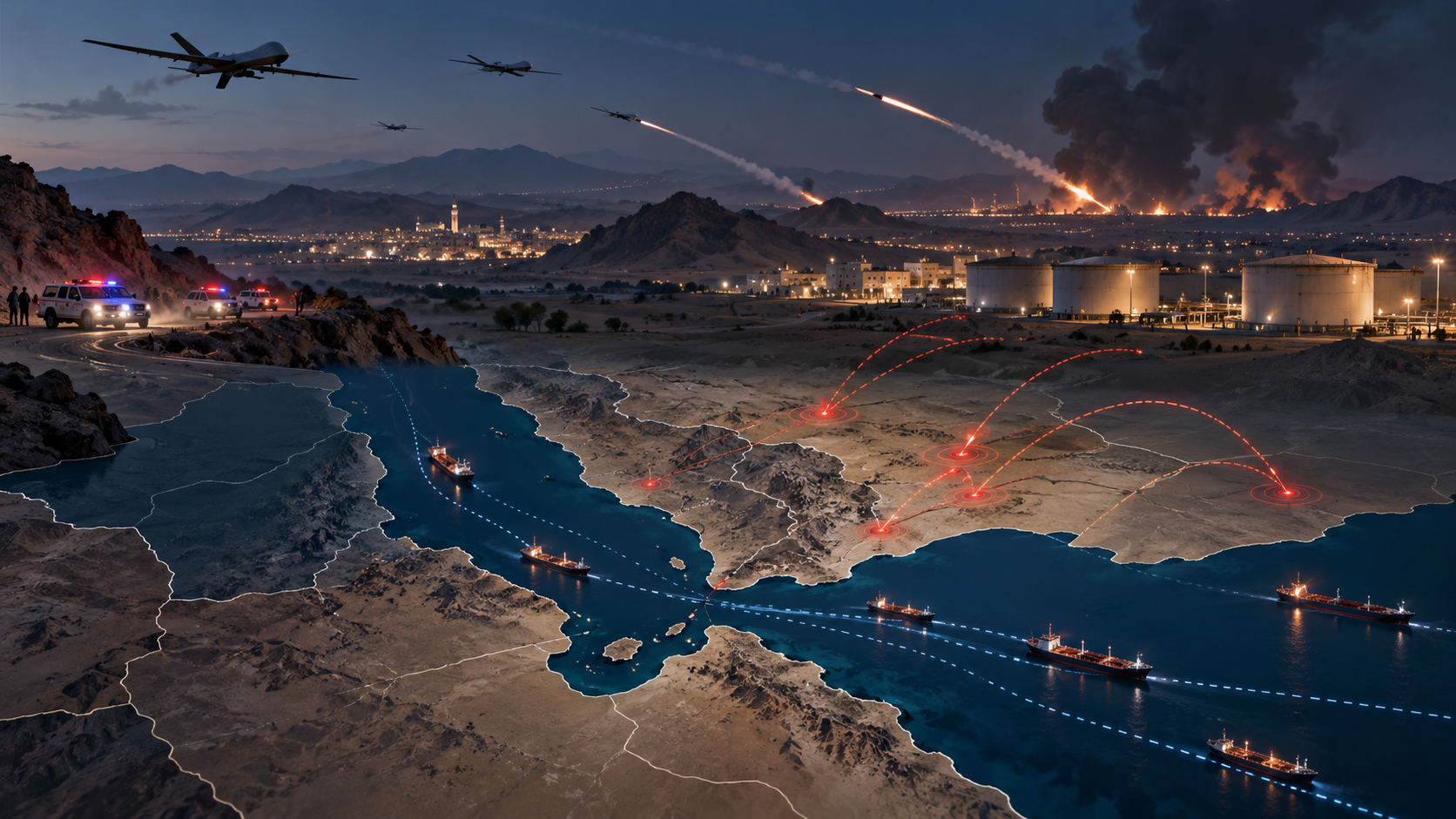
A new series of Houthi attacks has struck southern Saudi Arabia, injuring dozens of people and adding another dangerous front to an already widening Middle East conflict.
The Associated Press reported that attacks affected Khamis Mushait, Abha, Najran and Jazan. Saudi authorities said at least 73 people were injured, while fires were reported at Saudi Aramco facilities in Jazan and Abha. The publicly available reports did not describe fatalities.
The attacks represent more than another exchange of missiles and drones. Southern Saudi cities are home to civilians, airports, businesses and energy infrastructure. Damage in those areas can affect daily life while increasing concern about transportation and global oil supplies.
Saudi-led coalition officials said the strikes would receive a response. Any retaliation could create a cycle in which each attack produces a larger counterattack, increasing the possibility that civilian communities in both Saudi Arabia and Yemen will bear the consequences.
The Houthis control significant portions of Yemen, including the capital, Sanaa. The group has previously targeted Saudi territory and shipping associated with the Red Sea, but the latest attacks arrive amid a wider confrontation involving Iran, the United States and regional partners.
Reuters separately reported that Iran is planning another maritime exclusion zone in the Gulf and has issued new warnings involving American forces. These developments do not prove that every military action is centrally coordinated. They do show that several linked security crises are unfolding around crucial waterways and energy routes.
The humanitarian situation inside Yemen remains equally important. More than 18,000 people have recently been displaced, according to figures cited by the Associated Press. After years of conflict, many communities lack the financial and physical resources to absorb another sustained round of fighting.
Oil facilities naturally command international attention because attacks can influence prices and shipping decisions. However, measuring the crisis only through crude markets would miss its largest cost. Families living near military targets face disrupted schools, damaged homes, interrupted services and the continuing possibility of displacement.
The next steps will depend on whether Saudi Arabia chooses a limited military response or a broader campaign. Diplomacy may also become more difficult if regional governments conclude that restraint is being interpreted as weakness.
It is too early to determine whether this marks a permanent escalation. That would require evidence about the duration of the attacks, the Saudi response and the involvement of other governments.
What can already be established is that the conflict’s geographic boundaries are becoming less reliable. A war centered elsewhere in the region is now directly affecting cities and infrastructure in southern Saudi Arabia, creating new risks for civilians and the global economy.