

A new train connection is only as useful as the journey people can actually make to reach it. New York’s latest Interborough Express update puts that accessibility question alongside the project’s design work.
Governor Kathy Hochul’s September 9, 2026 announcement says the Metropolitan Transportation Authority is prioritizing accessibility improvements at the remaining four non-accessible subway stations that will connect with the planned IBX. The light-rail project would link Brooklyn and Queens; it is not open for passenger service. Governor’s September 9 statement, republished by Public
The named connections are Broadway Junction, Junius Street with a new link to Livonia Avenue, Avenue I and Wilson Avenue. The statement identifies different expected completion or contracting milestones for those projects. Wilson Avenue’s accessibility contract is targeted for award by mid-2027. These are planning expectations, not certificates of completed work. Governor’s September 9 statement, republished by Public
The same update says all 18 planned IBX stations will be designed for accessibility. Transportation Today reported the milestones September 11, including the intended connections to existing transit. The announcement belongs to this week’s development record, rather than being presented as an event that happened tonight. Transportation Today
The governor’s office estimates total project cost at $5.5 billion and identifies $2.75 billion approved through the MTA’s 2025–29 capital plan. Those figures are not interchangeable: an overall cost estimate and an approved funding allocation describe different parts of the project. Governor’s September 9 statement, republished by Public
Our transit analysis is that accessibility must work as a chain. An accessible vehicle does little for a rider who cannot reach the platform or complete a transfer. A useful project assessment therefore follows the whole trip instead of counting isolated elevators or ramps.
That matters to wheelchair users, people with temporary mobility limitations, older riders and families moving through the system with strollers or luggage. The specific needs differ, but the planning question is shared: can the connection be used reliably without an avoidable barrier?
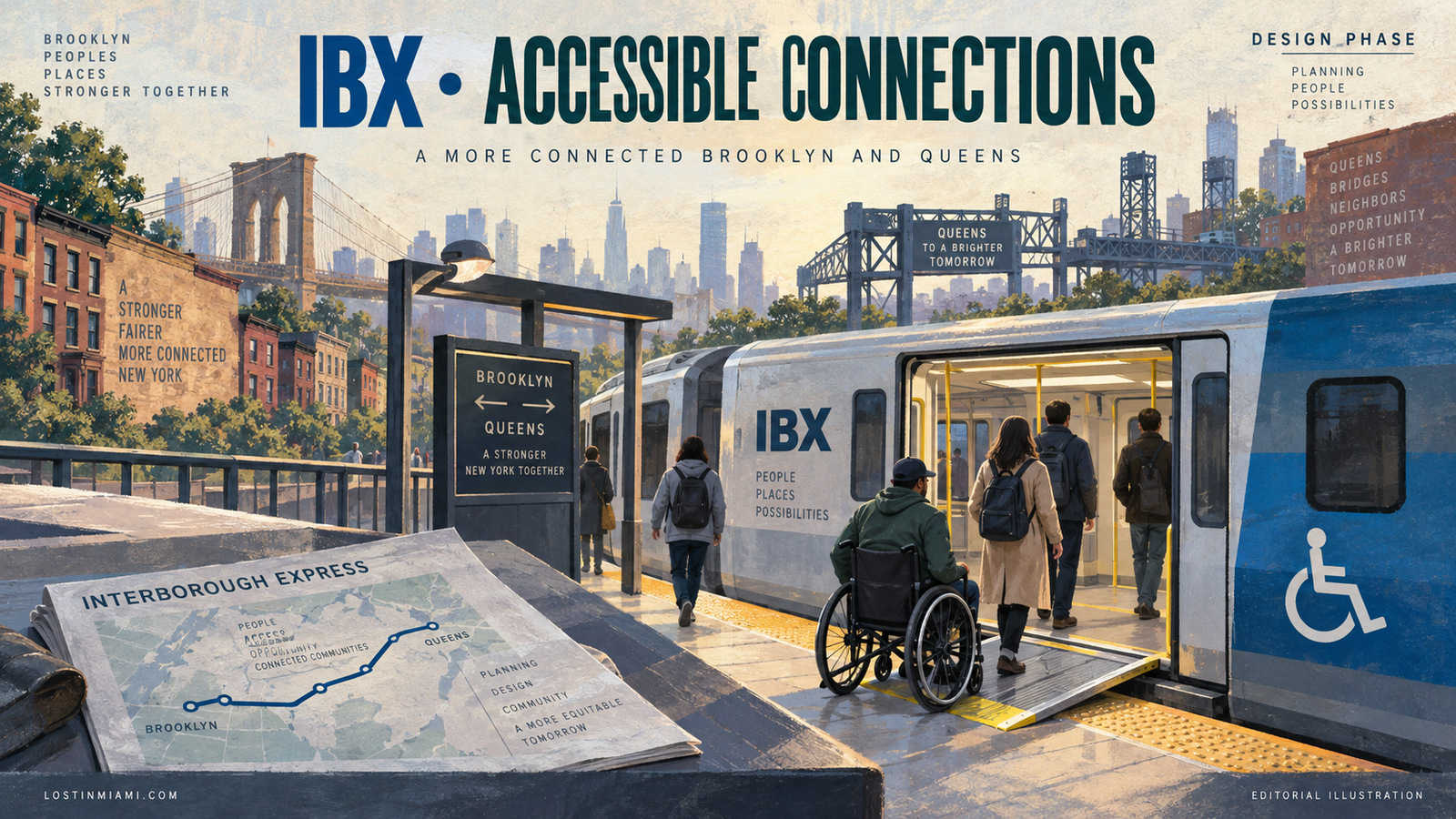
A rendering can communicate an idea, but it cannot prove that construction is complete or that every final design decision has been made. Our accompanying artwork is an editorial concept, not an official architectural rendering or a picture of a train currently carrying passengers.
The MTA project page is the appropriate place to follow the project’s development. Before making a real journey, riders should use current service and accessibility information for the existing network, not a proposed line on a future map. MTA project page
From here, the meaningful milestones are contracts, completed improvements, design decisions and a confirmed operating plan. Projected ridership and travel-time benefits will eventually need to be tested against service that actually runs.
The update is progress in planning a more usable connection between two boroughs. Its value will ultimately be measured at the transfer points where people make their everyday trips.


