

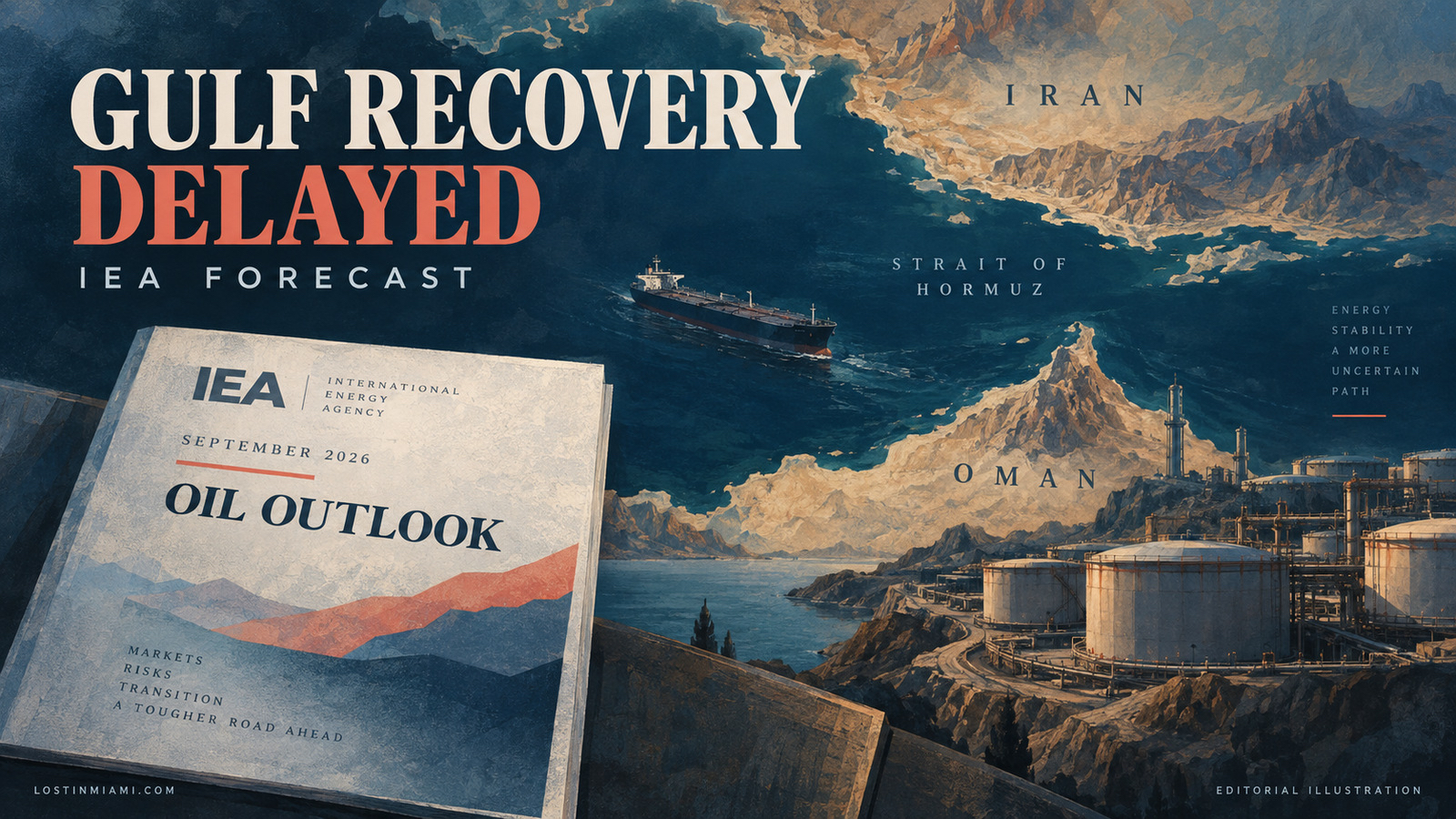
The energy consequences of the war involving Iran are extending beyond the immediate disruption to ships and production sites. The International Energy Agency now expects a full recovery in Gulf oil supplies to be delayed until 2027.
In its September 11, 2026 Oil Market Report, the IEA projects that global oil supply will fall by 5.7 million barrels a day this year, averaging 100.7 million barrels a day. The agency also cut its demand outlook, reflecting the strain of constrained supplies and higher fuel costs. These are forecasts built on current conditions, not completed annual results. IEA September Oil Market Report
The report says more than 10 million barrels a day of Gulf production remained shut in during August. It also estimates that observed global oil inventories declined by 95 million barrels that month. Those figures illustrate the pressure on both production and the stocks available to cushion disruption. IEA September Oil Market Report
Reuters reported the deeper projected supply decline and the delayed return of normal Gulf flows. World Oil separately summarized the revised outlook and its connection to prolonged regional disruption. Their coverage corroborates the agency’s published forecast; it does not independently verify every military claim made by parties to the conflict. Reuters World Oil
Our analysis is that supply recovery has several moving parts. Reopening production is not enough if a cargo cannot move reliably, and a safer shipping route does not instantly restore all the output that has been interrupted. The recovery date is therefore a market assumption, not a diplomatic deadline.
The distinction between crude and usable fuel also matters. Crude oil must be processed and transported before it becomes products consumed by households and businesses. Pressure at one stage can affect another, but it is misleading to treat every barrel or price quotation as interchangeable.
For Miami readers, the report is relevant to transportation and operating budgets, but it does not establish the price at a specific gas station or the size of a particular delivery surcharge. Local costs depend on more than a single international benchmark.
It also should not be turned into an investment instruction. A forecast can change when negotiations, security conditions, demand or production change. The important question is which assumptions moved and why, not whether an institution has supplied a guaranteed view of next year.
This update is focused on the separately sourced energy outlook. It does not introduce unverified casualty figures, attribute attacks without evidence or imply that a projected supply rebound means the humanitarian consequences of the war will have ended.
The next useful indicators are revised production estimates, shipping conditions and changes in inventories, alongside substantive diplomatic developments. For now, the IEA’s September assessment points to a longer period of disruption than a quick-recovery narrative would suggest.

