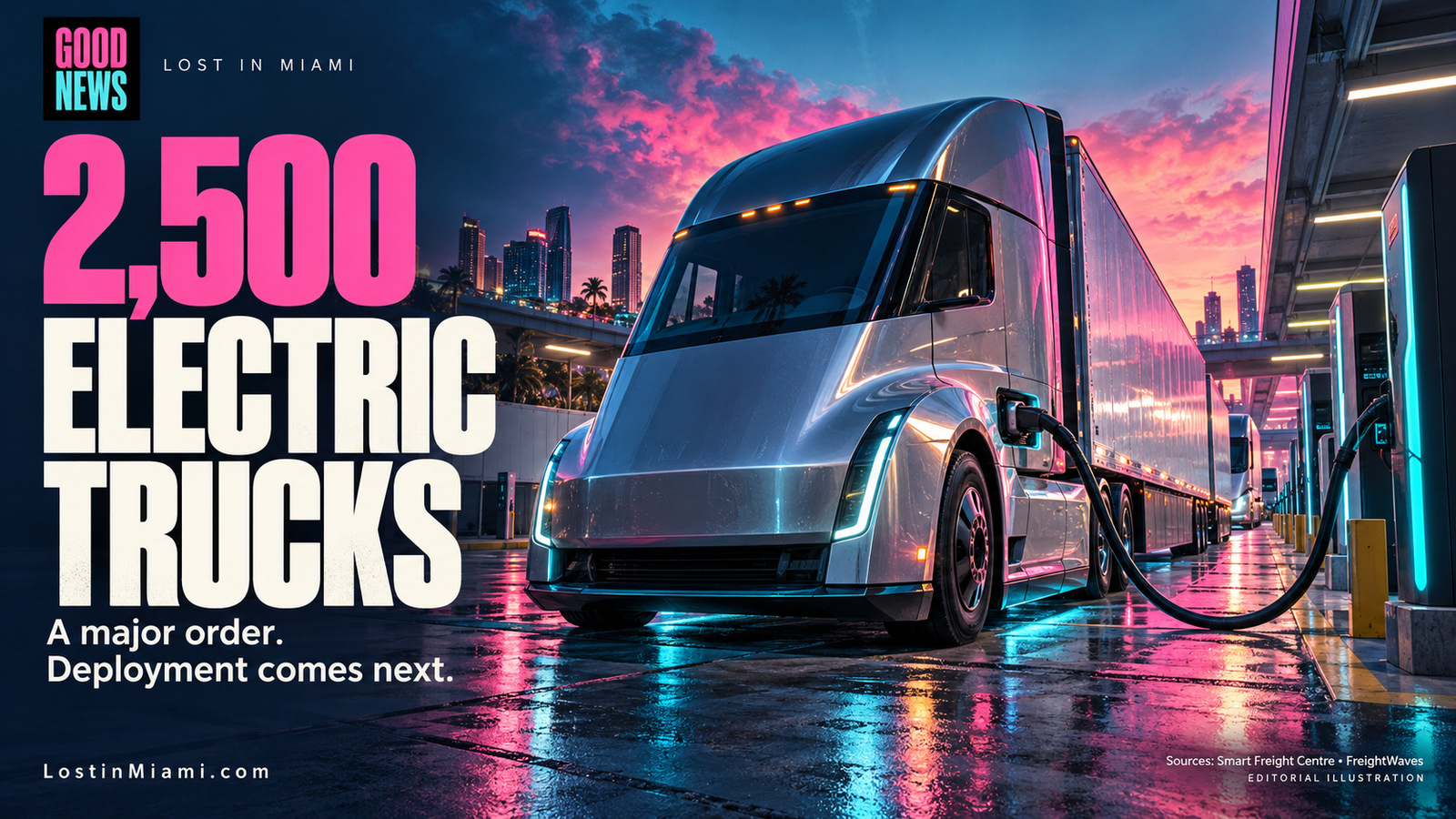
A shipper coalition has placed an order for 2,500 battery-electric Class 8 trucks, creating one of the clearest tests yet of whether heavy-duty electrification can move from pilot programs to fleet scale.
Smart Freight Centre and Catalyst Mobility announced the order September 22 through their ZET SCALE initiative—the Zero-Emission Truck Shipper-Carrier Alliance Leading Electrification. Organizers called it the largest U.S. electric-truck order to date and said it could nearly double the nation’s existing battery-electric Class 8 fleet.
Tesla was selected as the primary original-equipment manufacturer. Founding shippers include Microsoft and PepsiCo, with other participants supporting the program through demand commitments and freight volume.
Those facts need a caveat: the announcement does not mean 2,500 trucks are already operating, and it does not assign a specific number of tractors, routes or delivery dates to each named shipper.
ZET SCALE’s model aggregates demand. Instead of a carrier trying to finance a handful of expensive trucks and chargers alone, the alliance groups shipper demand, works with fleets and analyzes each operation’s duty cycle, energy use and infrastructure needs.
That matters because buying the tractor is only one piece. A carrier needs enough charging power at the right depot, predictable dwell time, trained technicians and a route that fits the truck’s real-world range. Utility interconnection delays can stretch far beyond a truck purchase order.
Owner-operators should also avoid reading the announcement as an immediate mandate or a universal operating solution. Long-haul lanes, team operations, extreme weather and irregular freight remain harder than repeat regional routes with overnight depot charging.
The economics will depend on acquisition cost, incentives, electricity prices, maintenance, payload, residual value and charger utilization. ZET SCALE says it wants to expand its model to 10,000 or more trucks, but that target is an ambition, not a completed commitment.
For the trucking industry, the real breakthrough may be procurement structure. Large shippers can use their freight demand to give manufacturers and charging providers a clearer market signal. Carriers can then evaluate equipment against contracted work instead of making the transition on speculation.
The next proof point will be deployment: how many trucks arrive, which freight hubs receive them, whether charging is ready and how uptime compares with diesel operations.
The order is substantial. The operational story begins when those tractors start hauling freight every day.
Fleets will be watching the unglamorous metrics: charger uptime, miles between failures, driver acceptance and total cost per loaded mile. Those numbers—not the ceremony around the purchase order—will determine whether the model scales.
Sources
Smart Freight Centre announcement, FreightWaves, Trucking Dive
Featured image: original editorial illustration.